
Exclusive IPD distributor for the Czech and Slovak RepublicsOriginal components · CAD/CAM libraries · technical support+420 604 483 343obchod@exklusiv-dent.cz
FEM and vectors

Vector analysis and FEM in implant-prosthetic design

How can vectors and FEM help us understand loading in an implant-supported restoration?

Technical principles and biomechanics Category 2 English technical abstract
Vector analysis and FEM in implant-prosthetic design
Vector analysis and FEM in implant-prosthetic design.

English technical abstract

The article approaches implant-prosthetic design as a problem of forces and their directions. Unlike a natural tooth, an implant has no periodontal ligament, so load transfer differs and is more sensitive to occlusion, restoration span, prosthetic height and the direction of contacts.

FEM and vector analysis help illustrate where forces concentrate and how design choices may reduce overload risk. Within the IPD website, this is a deeper technical article linking Ti-bases, screws, Multi-Unit systems and the principle of passive fit.

FEMvectorsocclusionforcesrestoration

What the article covers and how to read it

Direction of forcesLoad magnitude is not the only factor; direction, lever arm and contact location also matter.
Implant versus natural toothAn implant transfers load differently from a natural tooth because physiological damping by the periodontal ligament is absent.
FEM modelComputational analysis helps visualise areas of stress concentration and compare design variants.
Restoration designCAD design should account not only for aesthetics but also biomechanics, occlusion, seating and service access.

Relevance for the laboratory, dental practice and technical support

  • In extensive restorations, occlusal contacts, cantilevers, prosthetic height and load direction should be considered at the design stage.
  • Vector-based thinking helps explain why the same component can behave differently in different clinical situations.
  • The article provides useful technical background for discussions with advanced laboratories and implant clinicians.

Limitations and cautious interpretation

This is technical and conceptual material. FEM models always simplify reality and are useful for understanding trends, not as direct clinical measurements.

Original source article

Original title: Vector Analysis and FEM to Design Prostheses on Implants?

Download the original PDF

The source document remains available so readers can verify the original wording, methodology and results.

PDF

Related IPD pages and workflows

Glossary of abbreviations and specialist terms

An asterisk next to a term in the text refers to its explanation below.

FEM
FEM means finite element method, a computational simulation of stress and deformation in a model.
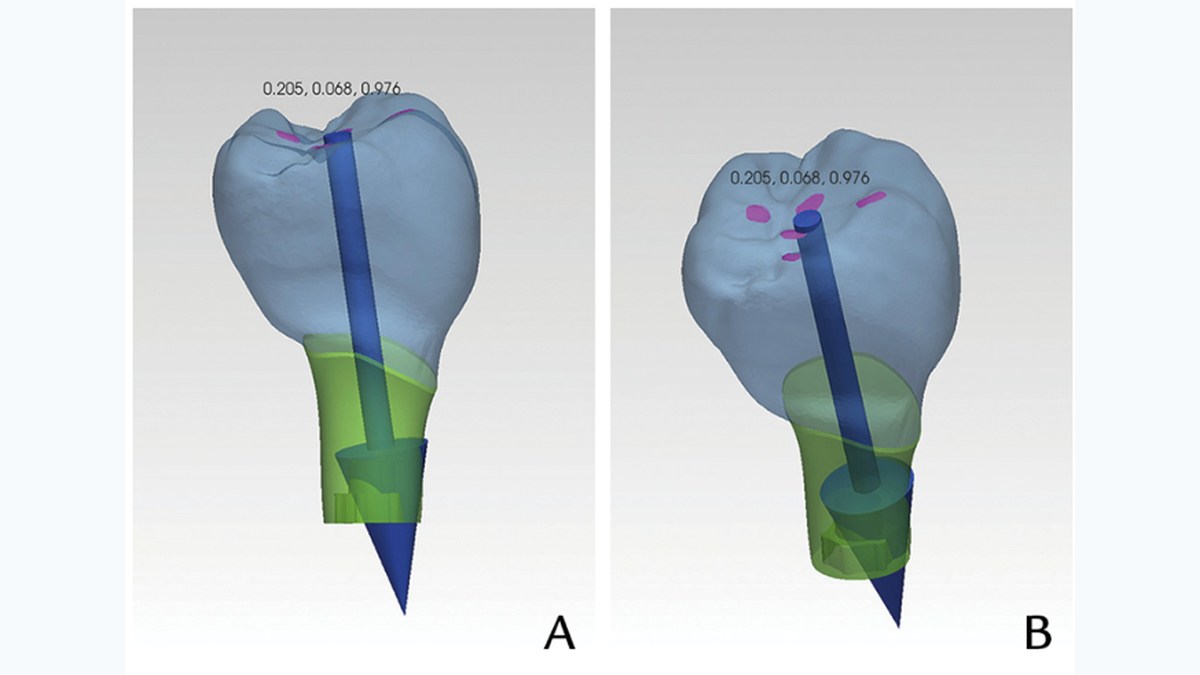
Original PDF: Vector Analysis and FEM to Design Prostheses on Implants?
Original PDF: Vector Analysis and FEM to Design Prostheses on Implants?. Images are taken from the accompanying source document.
The source document is included with this version of the website.
This English page is an editorial professional adaptation. The original PDF can be opened to verify wording, images and context.

Open the original PDF
e-dent logo

I am a healthcare professional within the meaning of Section 2a of Czech Act No. 40/1995 Coll., on the Regulation of Advertising. I confirm that I am authorised to access pages intended for healthcare professionals.