

Exclusive IPD distributor for the Czech and Slovak RepublicsOriginal components · CAD/CAM libraries · technical support+420 604 483 343obchod@exklusiv-dent.cz
White paper

Accuracy of CAD/CAM restorations and deviation control

Why must deviation be controlled from the scan through to the 3D model in CAD/CAM implant prosthodontics?

Technical principles and biomechanics Clinical & technical article English technical abstract
Accuracy of CAD/CAM restorations and deviation control
Accuracy of CAD/CAM restorations and control of deviation.

English technical abstract

This white paper develops the broader concept of accuracy within a more specific CAD/CAM context. It notes that intraoral scanners can produce different data, making it important to use a library appropriate to the scanner, scan body and manufacturing workflow.

The document also emphasises the model stage of the digital workflow. A printed model is not automatically accurate simply because it was generated from digital data. Printing accuracy, resin, offset and digital-analog seating must be verified and calibrated.

accuracy*libraryoffsetmodelvalidation

What the article covers and how to read it

The scan is not the end of the accuracy chainThe digital impression is the input data layer. What matters next is how the mesh* is matched to the library geometry and what additional deviation is introduced by subsequent software and manufacturing steps.
Multi-library approachIn the document, IPD emphasises the value of multiple libraries and selecting a library that is geometrically appropriate for the specific scanning and manufacturing workflow.
Digital modelWith a 3D-printed model, the X/Y/Z axes, rotational stability of the analogs and the influence of the printer and resin must all be considered.
Offset and validationFor printed models, a calibrated offset and Validation Master* can be used to verify whether a specific printer produces geometry that corresponds to the library.

Relevance for the laboratory, dental practice and technical support

  • When introducing a new printer, resin or print setting, verify how the analog seats in the model and whether the library or offset requires adjustment.
  • When deviations recur, it is better to identify the weak point in the workflow than to automatically suspect a single component.
  • For the website, this article forms a useful bridge between CAD libraries, digital analogs and verification of printing accuracy.

Limitations and cautious interpretation

The white paper explains IPD principles and recommendations. Specific offset values must always be interpreted in relation to the particular printer, resin, print settings and library version.

Original source article

Original title: White paper IPD on the importance of accuracy

Download the original PDF

The source document remains available so that the original wording, methodology and results can be checked.

PDF

Related IPD pages and workflows

Glossary of abbreviations and specialist terms

An asterisk next to a term in the text refers to its explanation below.

Validation Master
Validation Master is a verification STL or calibration object used to check 3D-printing accuracy and analog seating.
accuracy
Accuracy describes overall closeness to the true value.
mesh
A mesh is a 3D network of points and surfaces generated during digital scanning.
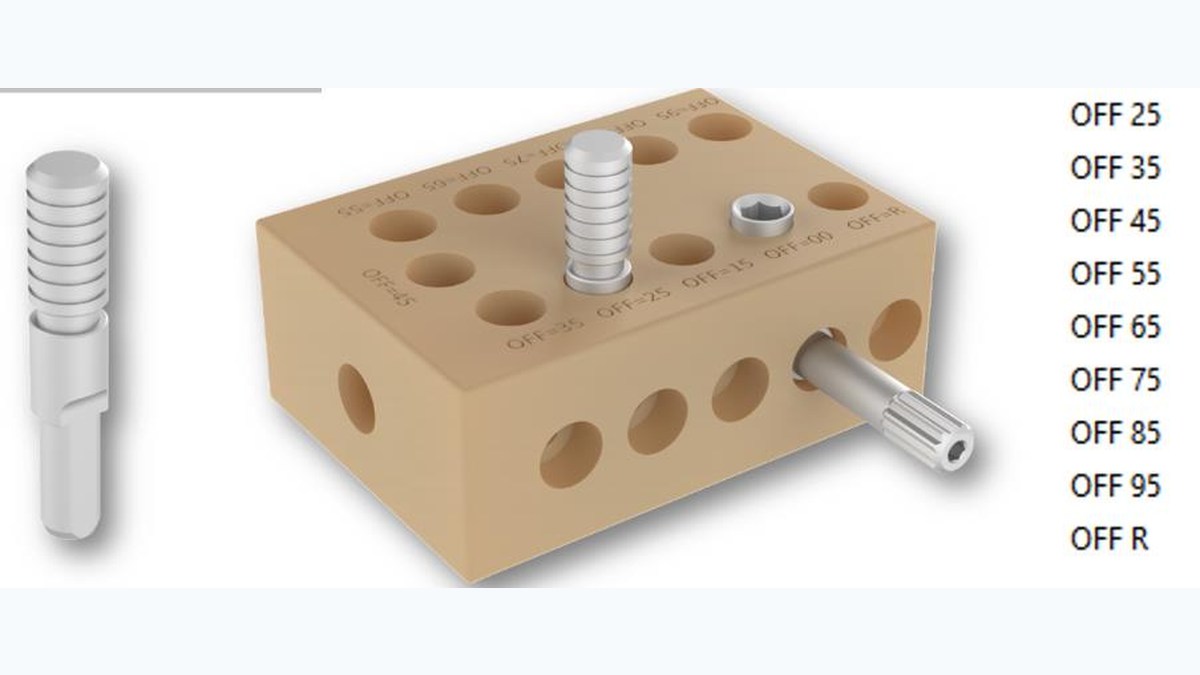
Original PDF: The Significance of Precision in Fabricating Implant-Supported Dental Prosthetics
Original PDF: The Significance of Precision in Fabricating Implant-Supported Dental Prosthetics. Images are taken from the accompanying source document.
The source document is included with this version of the website.
This English page is an editorial professional adaptation. The original PDF can be opened to verify wording, images and context.

Open the original PDF
e-dent logo

I am a healthcare professional within the meaning of Section 2a of Czech Act No. 40/1995 Coll., on the Regulation of Advertising. I confirm that I am authorised to access pages intended for healthcare professionals.